










Raining Ash and a Tower of Black Smoke: Families Flee ‘Apocalyptic’ Wildfires on the Road out of Lège-Cap Ferret
By Independent News
Thousands abandoned their homes in the early hours of Friday morning as massive wildfires spread across France. Residents tell Maira Butt that many families have lost everything, while others don’t know when they can return.
Driving away from her home in the wealthy resort town of Lège-Cap Ferret, Marion Girault-Rime was suddenly overwhelmed by the smell of smoke.
She was left speechless as cinders blew across her car windscreen like “raining ash”, with bright-red flames erupting and a towering pillar of black smoke billowing 20km in the distance. The scene was “frightening and spectacular”, she says.
“I still stink of smoke,” the 53-year-old marketing business owner tells The Independent from her friend’s home in Bordeaux. “My car stinks of smoke. I don’t think I will ever get the smell out.”
Marion, like her neighbours, was awoken at around 4am on Friday morning by an emergency alert on her phone that instructed every citizen in the town to evacuate immediately.
She grabbed underwear and toothbrushes and, along with her daughter Mahau and boyfriend Tony, rushed to the car. “Luckily, my husband and son were not at home.”
Marion Girault-Rime recalls her journey out of Lège-Cap Ferret (Marion Girault-Rime/Quatre Histoires)
The road to Bordeaux was crammed with hundreds of cars as people fled their homes, but she describes a “peaceful” atmosphere with people driving patiently.
“It was very disciplined. Nobody was stressing out or beeping,” she says.
Colonel Romain Moutard, the deputy director of the Landes fire and rescue service, said the fire was “apocalyptic” and described the situation as “Dantesque” as flames spread.
As people reached emergency evacuation shelters, Marion has been helping with volunteer efforts and trying to reassure her neighbours that their homes will be fine and survive the blaze. But, she says, some have already lost everything.
“We were feeding and giving drinks to people that had evacuated from campsites and telling them that there was no way their homes would burn and being reassuring. In fact, homes did burn,” she says.
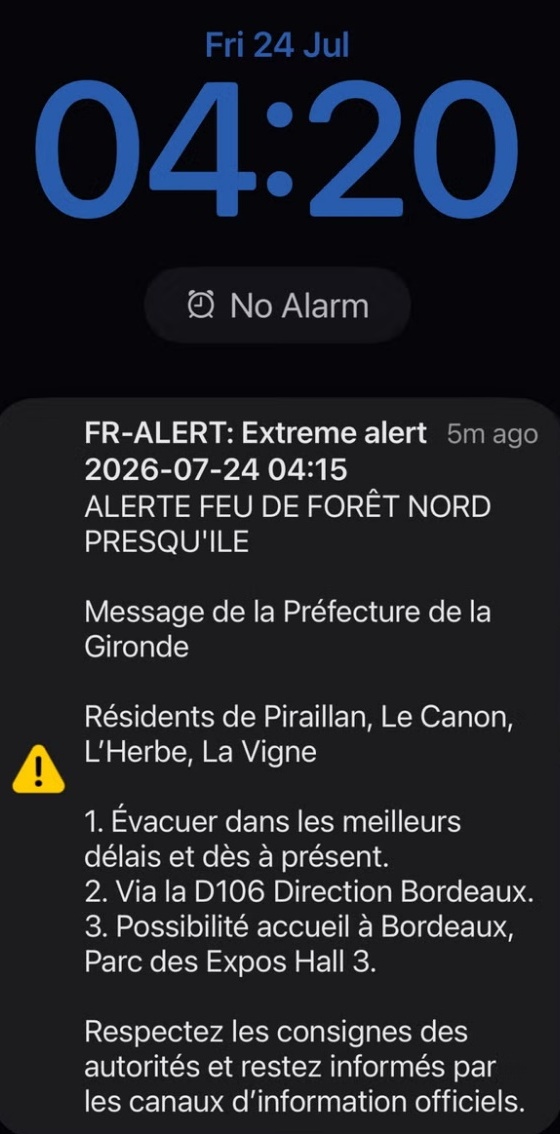
Residents received an emergency alert to evacuate immediately (Marion Girault-Rime)
“We didn’t think this would happen to us. It was a bit of a shock to have this happen to us.”
Having moved to Lège-Cap Ferret in 2010, from Australia, she describes the town as a “swanky resort town where actors and other famous people have their summer homes”. Over 120,000 tourists pass through the town during its peak season, but otherwise it is a small-knit community of 12,000 people.
She says that the less affluent areas of the community, made up of fishermen and people who live on campsites and work on the seas, “have lost absolutely everything”.
“It’s going to be very difficult for them to rebuild,” she says, adding she is “worried” about the aftermath for parts of the community.
The smell of smoke and cinders followed the family on their way to Bordeaux (Marion Girault-Rime/Quatre Histoires)
She describes one elderly man suffering from heat stroke in the shelter. “What is he coming back to? These are the sort of things that we think about.”
What she thought would be a temporary measure has fast become a more severe crisis. Marion has not been told when she can return and now fears a prolonged spell away from her home.
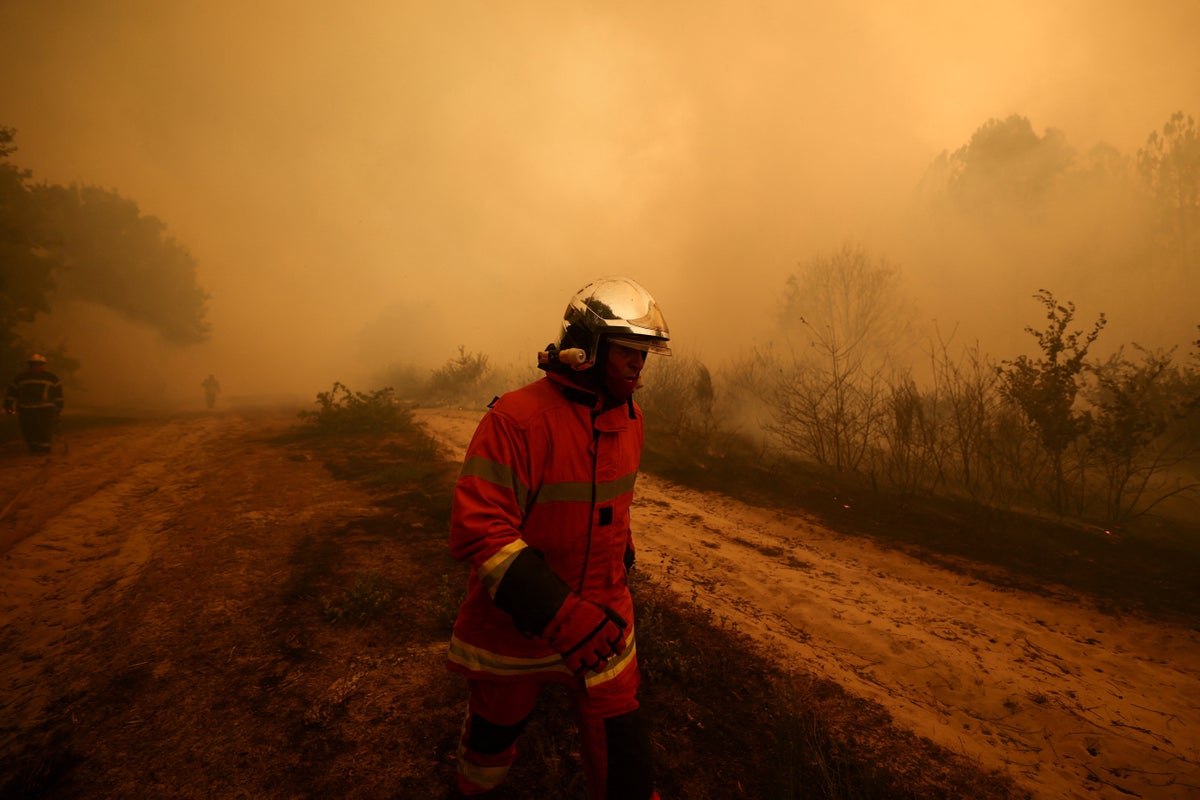
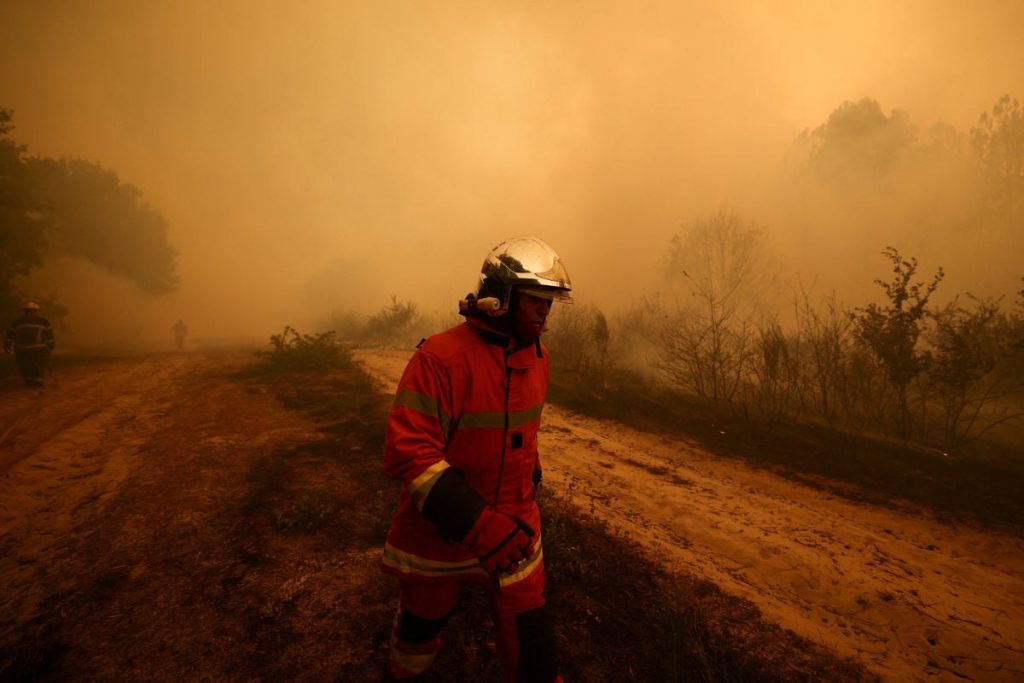
A firefighter walks amid smoke from a wildfire in Lege-Cap-Ferret in the Gironde department, amongst worsening drought conditions following a heatwave and water shortages across much of France, July 24, 2026. (Reuters)
“We don’t know when we’re coming back, which is the worst thing,” she says. Despite the region being affected by similar wildfires in 2022, and undertaking emergency exercises every year, she says the community has been left completely shaken.
“We know fires are expected, we know it’s something to be really careful about, so we’ve always planned for it,” she says. “But honestly, to have it happen… You think it’s going to happen in the forest, not right in the villages. You don’t think it’s going to burn down 80 houses or so.”
Smoke filled the roads out of the town as residents fled in the middle of the night (Marion Girault-Rime/Quatre Histoires)
As Europe faces one of its hottest summers on records, wildfires have affected several countries across the continent including Spain and Italy. Marion says that while the emergency response has been “fantastic”, an increased budget must be allocated to deal with the frequency of the crises.
“We were all waiting for the Canadair planes that use water to put the fires out,” she says. “In the end we got one plane with flame retardant and two spotter planes, but we didn’t get the ones that drop the water on the fires because they were otherwise occupied on other very dangerous fires.”
Over 80,000 people have been forced to flee from their homes across southwestern France and central Spain. Authorities believe that the cause of the fire was accidental.
