






The West Has Already Lost the Economic Race. The First Step Is Admitting It.
By Jamie McIntyre, Chief Editor, Australian National Review
Former U.S. Secretary of State Antony Blinken recently said something that would have been almost unthinkable for a senior American official to publicly acknowledge just a decade ago.
“China is bigger than us. Its market is much larger. Its manufacturing is three times ours. They have more ships. They publish more papers and file more patents. No matter how strong we are, competing head-to-head can be tough.”
That wasn’t Chinese propaganda.
That wasn’t a Beijing think tank.
That was one of America’s former top diplomats acknowledging what much of the world has already recognised.
China has won the economic race.
The question now is whether the West is prepared to admit it.
For decades, Western politicians convinced themselves that financial engineering, debt-fuelled consumption, endless money printing and exporting manufacturing overseas somehow represented progress.
China chose a different path.
It built factories.
It built ports.
It built roads.
It built airports.
It built high-speed rail.
It educated engineers.
It invested in science, technology and manufacturing.
While much of the West focused on quarterly corporate earnings and election cycles, China planned decades ahead.
The results speak for themselves.
China today is the world’s largest manufacturer, dominates many global supply chains, leads in numerous advanced technologies, files more patents than any other country and has lifted around 800 million people out of extreme poverty, one of history’s greatest poverty reduction achievements.
None of this means China is perfect.
It faces serious challenges including demographics, debt, property market pressures and ongoing debates about civil liberties and political freedoms.
But acknowledging China’s extraordinary economic achievements should not be controversial.
Instead, too many Western leaders continue pretending that decline is temporary.
It isn’t.
America remains the world’s strongest military power.
But military strength alone does not build prosperity.
Factories do.
Innovation does.
Infrastructure does.
Education does.
Productivity does.
Today the United States carries enormous government debt while much of its manufacturing base has moved offshore.
Australia faces similar problems.
Despite being one of the world’s wealthiest countries on paper, many Australians are finding it harder than ever to buy a home, raise a family or maintain the standard of living previous generations enjoyed.
GDP statistics tell only part of the story.
A nation’s wealth means little if ordinary citizens are becoming poorer.
Real prosperity is measured by opportunity, affordability, productivity and the strength of the middle class.
Perhaps this is where the West has the most to learn.
China has largely retained strategic control over major infrastructure including ports, railways and key utilities while allowing fierce competition throughout much of its private sector.
Its electric vehicle industry, for example, features dozens of competing manufacturers driving innovation and lower prices.
Whether every country should adopt China’s model is a matter for democratic debate.
But refusing to learn from successful policies simply because they originated elsewhere is arrogance, not leadership.
The global balance of power is also shifting.
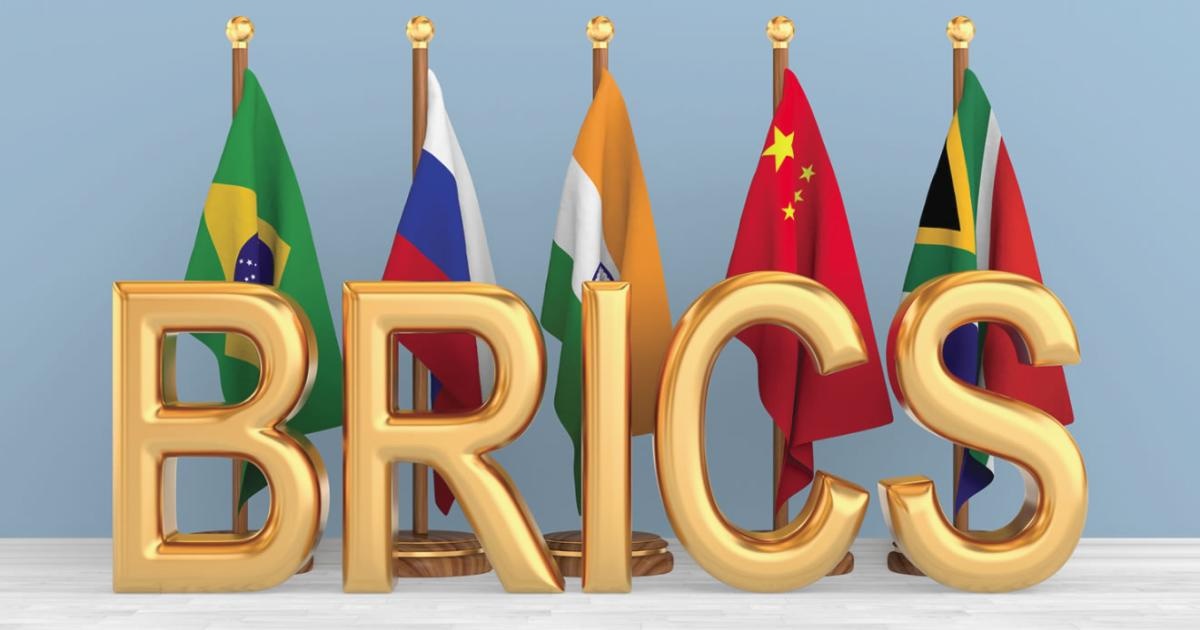
The BRICS nations continue expanding their economic influence across trade, manufacturing, energy and finance.
The world is steadily becoming more multipolar.
That trend appears unlikely to reverse.
Many Western foreign policy decisions over recent decades have also imposed significant financial burdens on taxpayers through prolonged overseas military commitments. Critics argue these priorities have often come at the expense of investment in domestic infrastructure, manufacturing and productivity.
Whether one agrees with every strategic decision or not, the opportunity cost is increasingly difficult to ignore.
Meanwhile, China has concentrated much of its international strategy on expanding trade, infrastructure investment and economic partnerships through initiatives such as the Belt and Road Initiative.
The contrast in priorities is becoming increasingly obvious.
The greatest threat facing the West is no longer China.
It is complacency.
It is believing yesterday’s success guarantees tomorrow’s prosperity.
It is assuming financial markets matter more than productive economies.
It is measuring success by share prices instead of whether young families can afford homes, whether businesses can compete globally and whether nations still manufacture the products they depend upon.
History teaches that every great power eventually reaches a crossroads.
Some adapt.
Others deny reality until it is too late.
China recognised decades ago that economic strength creates geopolitical influence.
The West increasingly appears to believe geopolitical influence can substitute for economic strength.
History suggests otherwise.
The future will not belong to the country that gives the best speeches.
It will belong to the country that builds the best infrastructure, develops the best technology, educates the most skilled workforce, manufactures the most valuable products and creates lasting prosperity for its people.
The West still has extraordinary strengths.
Its universities remain among the world’s finest.
Its entrepreneurs continue producing remarkable innovations.
Its legal institutions, capital markets and tradition of free enterprise remain powerful advantages.
But none of those strengths are permanent.
Unless Western governments rediscover the importance of long-term thinking, productive investment, industrial capability and rebuilding the middle class, they risk falling further behind.
Antony Blinken’s comments may one day be remembered not as a prediction, but as a quiet acknowledgement that the balance of economic power had already shifted.
The sooner Western leaders stop denying reality and start learning from what works, wherever it works, the better the chances of renewing prosperity for future generations.
