




Is the US Dollar Close to a Crash?
By Jamie McIntyre | Australian National Review
Political commentator Jamie McIntyre predicts the timeframe for the decline of the US dollar’s global dominance has shortened dramatically.
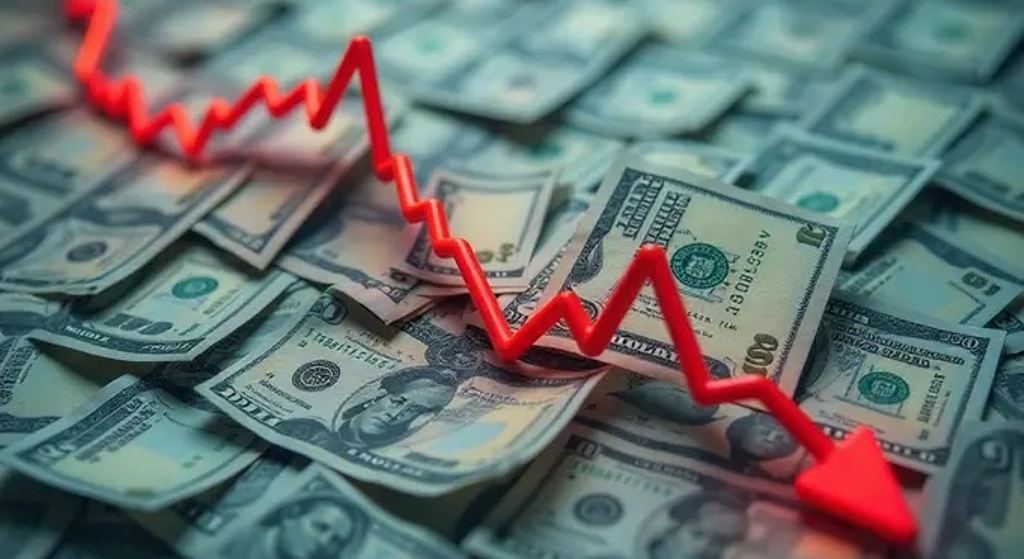
Political commentator Jamie McIntyre has dramatically shortened his predicted timeframe for the erosion of the United States dollar’s dominance as the world’s principal reserve currency, warning that a transition once expected to take between 10 and 20 years could now unfold within five years—and potentially begin within months.
McIntyre argues that the Iran–Israel–United States conflict, the continuing disruption surrounding the Strait of Hormuz, the expansion of BRICS and Washington’s increasing reliance on sanctions have accelerated a historic restructuring of the international monetary system.
“The timeframe has shortened dramatically,” McIntyre said. “What I previously believed could take 10, 15 or 20 years may now happen within months to five years. The dollar will not necessarily disappear, but its privileged position—and America’s ability to exploit that position without consequence—is under unprecedented pressure.”
Iran conflict exposes a changing balance of power
Iran has emerged from the conflict in a far stronger strategic position than many Western governments anticipated, McIntyre argues.
Iranian authorities claim to exercise control over the Strait of Hormuz, while the United States and Iran continue to make competing claims concerning military and commercial control of the passage. Negotiations have reportedly considered arrangements that would give Tehran authority over inbound shipping—an outcome that would represent a significant shift in regional power towards Iran.
Whatever view is taken of competing claims that Iran has “won” the war, McIntyre says Tehran has demonstrated that it cannot easily be subdued by American and Israeli military power.
“Iran has survived an enormous military campaign, inflicted serious costs on its opponents and established itself as a power that cannot simply be ordered around,” he said.
“Israel is no longer able to assume uncontested regional military dominance, while the United States has again discovered the limitations of attempting to impose political outcomes through bombing, blockades and sanctions.”
McIntyre rejects the idea that the world must remain subject to any single dominant power—whether the United States, China, Israel or another state.
“The majority of humanity does not want a centralised global surveillance system controlled by one government or one military alliance,” he said. “A genuinely multipolar world, in which sovereign countries cooperate without answering to a single imperial centre, is increasingly attractive across Asia, Africa, Latin America and the Middle East.”
Sanctions are encouraging countries to abandon the dollar
According to McIntyre, Washington has repeatedly treated access to the dollar-based financial system as a geopolitical weapon.
Russia, Iran and North Korea have faced extensive sanctions, while China and numerous other countries have confronted tariffs, financial restrictions or threats of secondary sanctions. These measures may cause immediate economic damage, but they also give targeted countries a powerful incentive to construct financial systems beyond Washington’s control.
“The United States has weaponised the dollar so aggressively that it is teaching the rest of the world how dangerous dependence on the dollar can be,” McIntyre said.
“Every frozen reserve, blocked transaction and threatened secondary sanction sends the same message: develop alternative payment systems, hold more gold and settle trade in your own currencies.”
BRICS has supported greater use of national currencies, cross-border payment interoperability and local-currency financing. Although it has not created a common reserve currency, its members are gradually building mechanisms designed to reduce their exposure to dollar-based settlement.
McIntyre believes energy trading will be decisive. If a growing proportion of oil, gas, minerals and manufactured goods is priced and settled in yuan, rupees, roubles, reals, dirhams or other currencies, international demand for dollars could weaken substantially.
“The petrodollar system has been one of the foundations of American financial power,” he said. “Once major energy producers no longer need to sell predominantly in dollars, a critical pillar supporting dollar demand begins to fracture.”
The dollar remains dominant—but its long-term share has fallen.
McIntyre acknowledged that the dollar has not yet lost its position as the world’s leading reserve currency.
International Monetary Fund figures show that the dollar represented approximately 57.13 percent of allocated global foreign-exchange reserves in the first quarter of 2026. Its share increased slightly during that particular quarter, although it remains well below the level of more than 70 percent recorded in the late 1990s.