






Commentary
Reporting season is revealing something uncomfortable about the Australian economy.
Australians have not stopped spending. But they are more selective about what they buy, where they buy it, and whether it can be justified.
There is a useful way to understand the economy that does not require an economist or politician talking about employment, GDP, wage, or inflation figures.
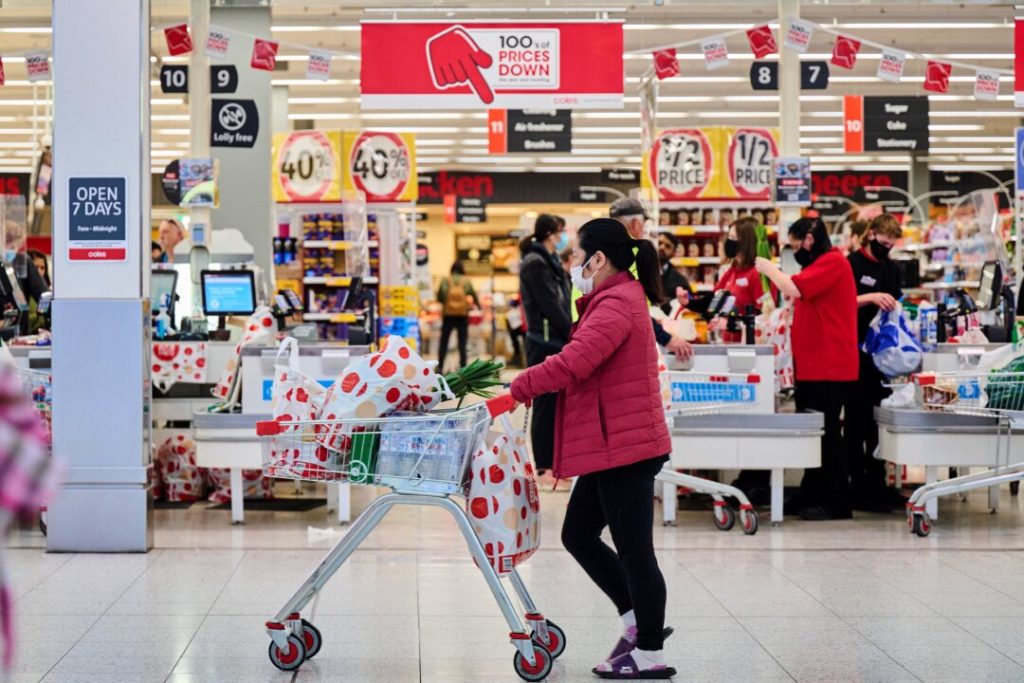
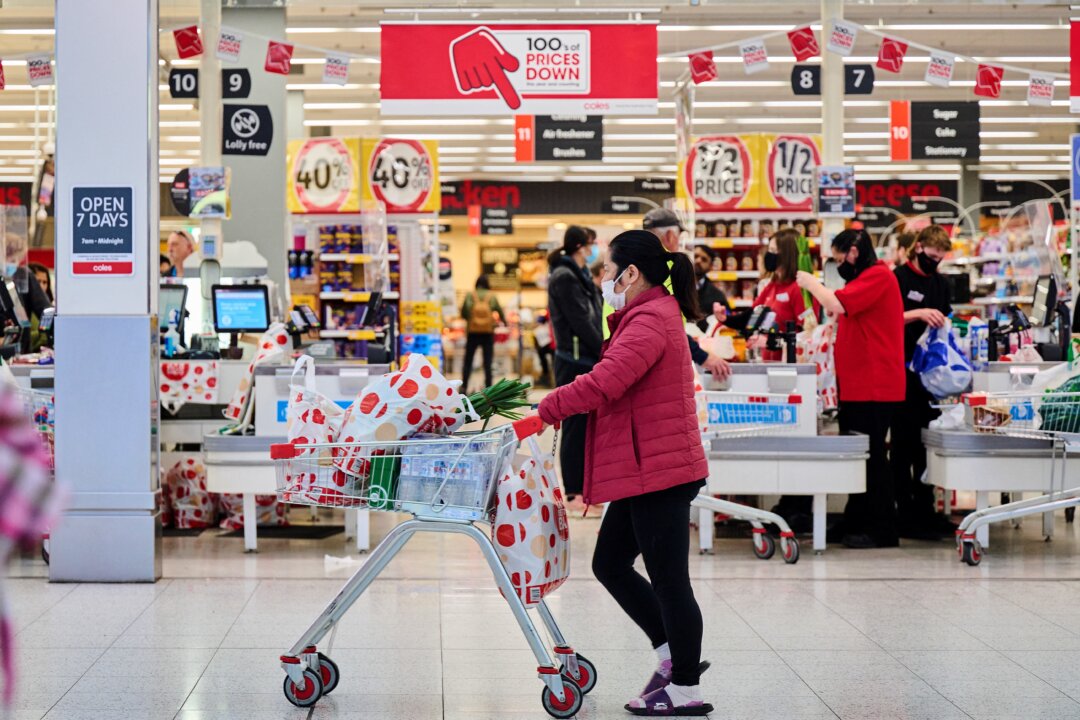
Just go to the checkout.
It’s corporate reporting season, and recent results provide a window into Australian household behaviour that economic statistics can sometimes obscure.
Its FY26 Australian Food sales increased 4.6 percent to $53.9 billion, while earnings rose 8.5 percent.
But its response to the market is telling. Woolworths has expanded its “Lower Shelf Price” range to more than 1,000 products and says customers can save an average of 30 percent by choosing its own private label products.

Woolworths signage and logo on the side of a transport truck in Melbourne, Australia, on March 13, 2024 . Asanka Ratnayake/Getty Images
That does not prove households are buying less, but it shows price and value have become central to the supermarket battle.
Now, the essential spending category tells us little about whether households feel prosperous because grocery shopping can be difficult to defer—families can postpone replacing a television or renovating a kitchen, but they cannot postpone dinner.
The more revealing test is discretionary spending.
In that case, electronics retail giant JB Hi-Fi’s FY26 result initially look reassuring.
Group sales reached a record $11.06 billion, up 4.8 percent, while net profit rose 6 percent to $489.9 million.
But the quarterly trend was weaker. Comparable sales growth slowed from 5 percent in the first half to 2.6 percent in the third quarter, before falling 0.8 percent in the fourth.

People shop in a JB Hi-Fi store on May 28, 2015 in Melbourne, Australia. Scott Barbour/Getty Images
There were company-specific factors, including supplier price increases and stock shortages, so the figures cannot simply be attributed to household stress.
But the answer becomes clearer once we examine the price-focused online-only retailer Kogan.
Gross sales reached a record $1.04 billion and revenue rose 4.6 percent. It also returned to an $11.2 million profit after a $39.5 million loss the previous year.
Its value proposition appears to be resonating with price-conscious consumers. Australians are still spending where they believe they are getting value.
Meanwhile, premium appliance maker Breville reveals something else.
The global company recorded a record FY26 revenue of $1.81 billion, up 6.7 percent, with coffee and cooking among its strongest categories.
A $600 coffee machine looks different when the alternative is spending $7 or $8 at a café every morning. Such purchases can be considered not simply luxury purchases, but a way for people to cut out a daily recurring expense.
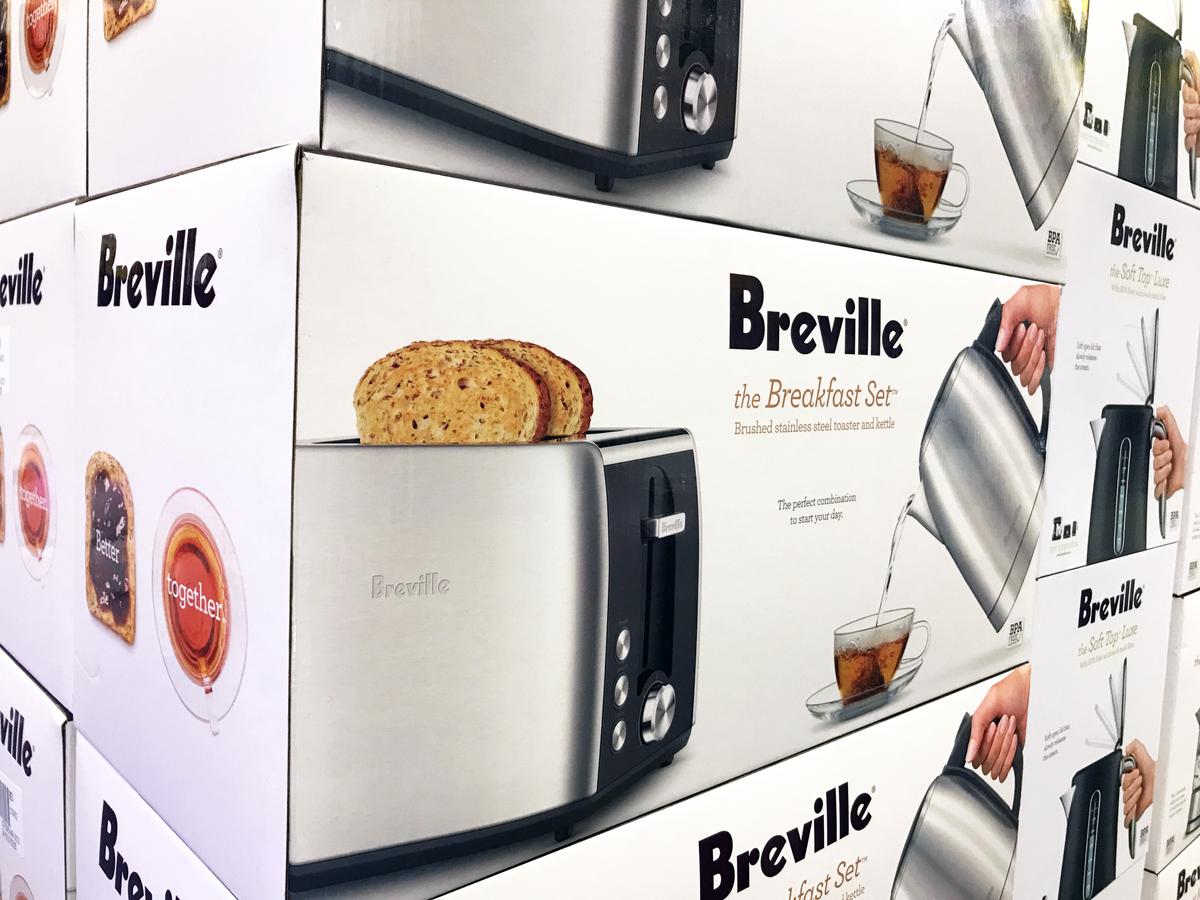
Breville products on display at a store in Sydney, Australia on Aug. 15, 2019. AAP Image/Stuart Condie
Breville is a global company, so its result is not a direct measure of Australian household finances, but it illustrates how consumers remain willing to make substantial purchases when they can see a practical benefit or saving.
That is important when interpreting the recent drop in inflation.
Inflation, Credit Burden Weighing Down Australians
Falling inflation does not mean falling prices. If prices rise 10 percent and inflation subsequently falls to 3 percent, a $100 basket becomes $110 and then $113. It does not become $103.
Households experience this at the checkout.
Then there is credit.
The Reserve Bank says Australians had $44.2 billion outstanding on credit and charge cards in June, including $21.6 billion accruing interest.
Personal credit grew 4.7 percent over the year, while scheduled mortgage and consumer-credit payments reached just under 12 percent of household disposable income.
It adds to the conclusion that household financial commitments remain significant and consumers are becoming more careful and deliberate.
Meanwhile, the full effects of the May federal budget have also yet to flow through household finances, making the next few reporting periods important.
If confidence improves and discretionary spending accelerates, Canberra will have evidence that its policies are translating into positive household behaviour.
If consumers continue trading down and postponing purchases, the government faces a different problem.