

Financial Predictor Says Predicting the Future in Markets and Who Will Win Wars Is Surprisingly Easy
By Jamie Mcintyre
Financial Predictor Says Predicting the Future in Markets and Who Will Win Wars Is Surprisingly Easy
When Jamie McIntyre, founder of Australian National Review, is asked how he managed to predict major financial trends years before they happened, his answer tends to surprise people.
Many assume successful forecasting requires complex algorithms, insider connections, or some kind of extraordinary intuition.
McIntyre says the reality is far simpler.
According to him, predicting future financial trends and even the likely outcomes of wars is often surprisingly easy once you understand how global narratives are shaped.
A Track Record of Early Calls
Over the past two decades, McIntyre says he advised members of his investor community to take positions in assets long before they became mainstream opportunities.
These included:
•Buying Bitcoin when it traded around $75 USD
•Selling Bitcoin when it approached $110,000
•Buying Gold when it was under $300 per ounce
•Holding gold through long-term forecasts toward $5,000
•Buying U.S. real estate near the 2010 market bottom after the financial crisis
•Advising investors to accumulate Australian property for more than 25 years, a market he says historically doubled roughly every decade until recent affordability pressures slowed growth
•Encouraging investors in more recent years to look at Bali and Lombok real estate, where rising tourism and international demand have driven strong growth
According to McIntyre, the investment insights shared with his audience over the years have helped investors within his community generate more than $10 billion in collective wealth growth.
But McIntyre insists the reason these trends were visible to him early had nothing to do with luck.
“You Don’t Need a Crystal Ball”
McIntyre says the biggest obstacle to understanding the future is the information most people rely on.
“You don’t need a crystal ball to know what’s likely to happen,” McIntyre said.
“Most people get it wrong because they’re listening to Western media.”
According to McIntyre, many Western media outlets repeat narratives shaped by powerful global elites who often influence both Western governments and the media organizations that report on them.
Because of this, he argues that mainstream reporting frequently presents a version of events designed to shape public opinion rather than accurately reflect geopolitical or economic realities.
Applying the Same Logic to Wars
McIntyre says the same approach used to identify financial trends can also help explain the likely outcomes of global conflicts.
When Western media widely reported that Ukraine would defeat Russia, McIntyre publicly argued that was highly unlikely.
He suggested the war would evolve into a long conflict where Russia’s larger industrial capacity, population base and strategic depth made a decisive Ukrainian victory improbable.
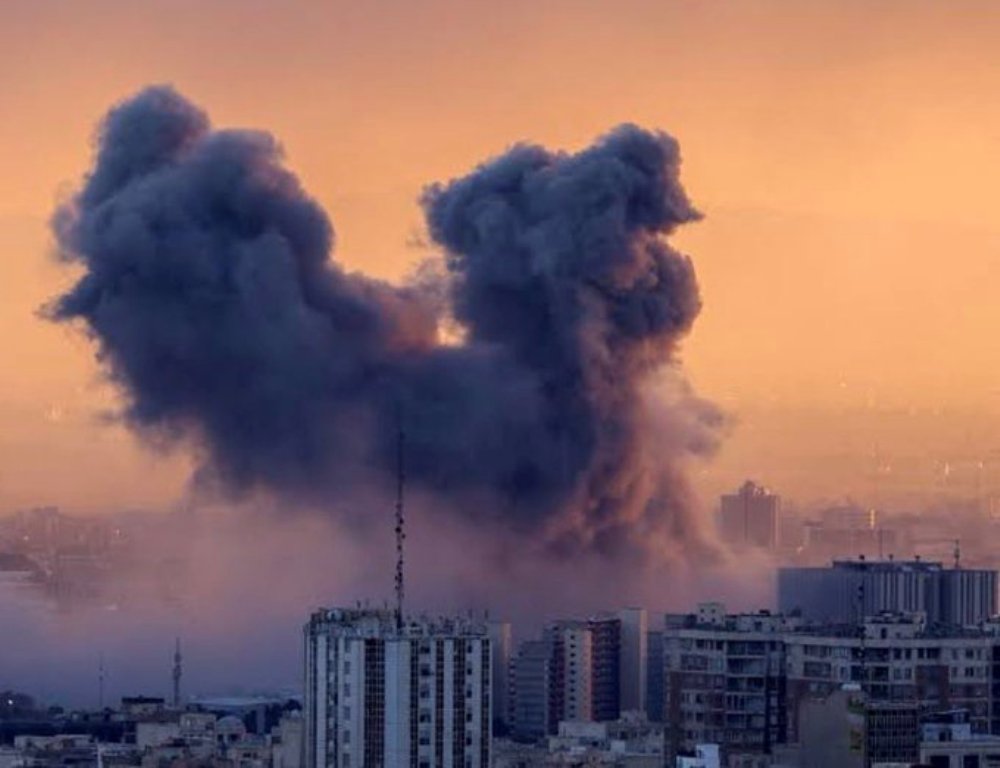
Similarly, as tensions escalate between Israel, Iran, and the United States, McIntyre has argued that Western analysts often underestimate the capabilities and resilience of their adversaries.
According to him, modern conflicts are rarely decided by technology alone.
Instead, wars tend to be determined by deeper structural factors such as:
•population size
•economic endurance
•industrial capacity
•energy resources
•long-term strategic patience
Looking Beyond the Western Information Bubble
McIntyre says one lesson he learned early in his career was to look beyond Western information sources.
He often references how observers in other parts of the world view Western media.
According to McIntyre, some Chinese commentators have joked that Western audiences treat their news as objective truth, while in China people openly acknowledge their own news is propaganda.
“In China they know their news is propaganda,” McIntyre said.
“They’re often amused that Westerners believe their media is completely independent.”