











For centuries in Japan, the meditative tradition of preparing and drinking matcha meant a pause: a bowl of whisked green tea, sipped slowly, and nothing else to do. Today it is moving from tradition to daily routine worldwide, as many swap coffee for a beverage that promises gentle focus and brief restoration. Matcha delivers—with a few caveats about caffeine, quality, and technique.
The difference between a smooth, savory flavor and a harsh, bitter one usually comes down to a handful of simple choices. Let’s unpack what makes matcha different, what to know about its benefits and caffeine, and how to choose and prepare it for a smooth, satisfying cup.
What Makes Matcha Different
Matcha is more than green tea in powder form. With regular tea, you steep the leaves in hot water and discard them. With matcha, you whisk finely milled leaves into water and drink it all. You take in everything the leaf holds, including caffeine, the amino acid L-theanine, and plant compounds called polyphenols, particularly epigallocatechin gallate (EGCG).
Caffeine boosts alertness by blocking adenosine, a chemical that signals sleepiness, while L-theanine may influence brain signaling and alpha brain waves associated with relaxed attention.
As a naturopath who drinks an espresso in the morning and matcha most afternoons, I also want to treasure these simple rewards. When I settle down to write, I find that more than one coffee leaves my mind a little too busy. With matcha, I feel more settled and better able to work through calls, messages, and emails one at a time, without feeling quite so overwhelmed.
However, a few simple preparation tips can make the difference between a harsh, bitter drink and one that feels like a tasty, joyful break in the day.
Related Stories

From Shaded Leaf to Fine Powder
Matcha comes from leaves grown for this purpose. Before harvest, growers shade the tea plants. The shade pushes the leaves to produce more chlorophyll and compounds that give matcha its savory character. Growers then steam the leaves to limit oxidation, dry them, strip them of stems and veins, and grind them into powder.
Traditionally, they grind the leaves slowly between granite stones. A single mill produces only about 40 grams of matcha an hour. This slow, labor-intensive process helps explain matcha’s higher cost.
How to Choose a Good Matcha
Not all matcha is equal. How it’s made and stored can affect its freshness and flavor, so it’s worth checking those details when choosing a powder to use at home.
“Nowadays it is so hard to buy good-quality matcha, especially online, because the actual product you receive can look very different from the photos online,” Miyashita told The Epoch Times.
Two label claims deserve some skepticism. Japan is best known for matcha, but other countries now make powdered green tea in a similar style. Where a powder comes from can offer clues about quality, but it doesn’t tell the whole story. Nor does “ceremonial grade”—a label commonly used for powders intended to be whisked and drunk on their own. The term is not universally regulated and doesn’t guarantee purity, flavor, freshness, or nutritional superiority.
For a clearer picture, check the seller’s website or ask:
-
Where was the tea grown?
-
When was it harvested?
-
How was it processed?
-
Is the powder tested for contaminants, including heavy metals and pesticide residues? Tea plants can absorb trace amounts of metals such as lead and cadmium from the soil, although levels in the leaves vary with growing conditions.
Choose a powder that suits your taste, budget, and how you plan to use it. Buy an amount you will use within a reasonable period, rather than a large container that will sit in the cupboard. Keep it sealed tightly and away from heat, moisture, light, and strong smells.
A Little Matcha Goes a Long Way
How matcha feels in practice depends partly on how much you use.
For people who are sensitive to caffeine, Miyashita recommends starting small. “If someone is really sensitive to caffeine, then I recommend they start with a quarter or half a teaspoon.”
Most healthy adults can consume up to 400 milligrams of caffeine daily from all sources, but some tolerate much less. During pregnancy, keep intake below 200 milligrams. If you have anxiety, sleep problems, or a heart rhythm condition—or take medication—check with your healthcare provider about your intake.
A smaller serving may help you find a comfortable amount, but matcha is still caffeinated.
3 Ways to Drink Matcha
How you prepare matcha changes its texture, intensity, and flavor. It can be light and foamy, thick and rich, or creamy with milk. Whichever you choose, a few basics apply.
The simplest, most traditional way to make matcha is to whisk it with water alone. Start with hot water, not boiling water. Miyashita recommends water at around 160 to 170 degrees Fahrenheit. If your kettle doesn’t measure exact temperature, then half boiled and half cold water can work too. Excessively hot water can intensify bitterness and mask the sweet and savory notes that make matcha appealing.
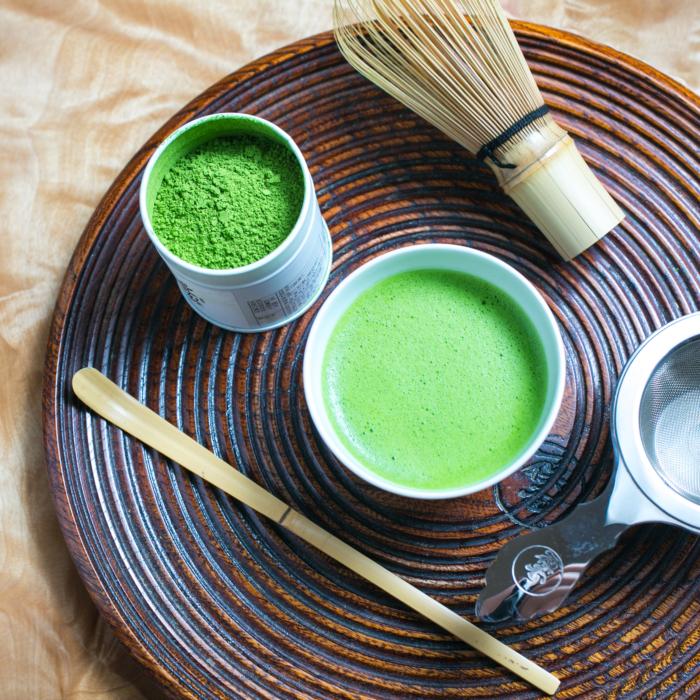
Choose your tool. A traditional bamboo whisk, or chasen, helps disperse the powder and produce foam, but you can get by without one. For thin matcha, move the whisk back and forth in a W pattern. A handheld frother is another option, particularly for a latte.
Usucha (Thin Matcha): the classic everyday preparation. Whisk about 2 grams of matcha with about 2 ounces of hot water. The result is a smooth, light drink with a layer of foam.
Koicha (Thick Matcha): uses more powder and less water. Slowly mix about 4 grams of matcha with about 1 ounce of hot water, rather than whisking it into a foam. The result is dense and velvety, with a deep, savory flavor that may appeal most to people already familiar with matcha.
Matcha Latte: may be a good starting point for people used to drinking coffee with milk. Start with 2 grams of matcha, sift it if it is clumpy, and whisk it with a splash of warm water until smooth, then add warm or cold milk. “Always mix the powder with a little bit of warm water first, and then add your choice of milk,” Miyashita said.
Matcha doesn’t truly dissolve, and mixing it directly into milk, especially cold milk, can make it harder to get a smooth result.
Dairy and plant milks all work. For a less-sweet latte, use unsweetened milk, taste it, and sweeten only if desired. Coconut milk is a popular choice in many New York cafés, alongside alternatives such as oat and almond milk.
The point is not to make matcha taste like dessert; it is to find a version you enjoy. “Sometimes, if you have really good-quality matcha, you taste the umami flavor,” Miyashita said.
Make Space for Enjoyment
Matcha’s roots in Japan are closely tied to Zen Buddhism. In 1191, the Buddhist monk Eisai returned from China with tea seeds and the custom of preparing powdered tea, a precursor to modern matcha. Zen monks drank the tea during meditation practice and served it in rituals.
Yoshitsugu Nagano, a Japanese tea ritual master trained in a 400-year-old samurai tradition of chanoyu (hot water for tea), sees matcha as both a beverage and a meditative practice. You do not need to learn tea ceremony etiquette to enjoy a good cup, he said. But the traditional practice offers something beyond the drink. Its repeated movements and courtesies invite attention and gratitude as guests acknowledge one another and thank the host.
“You do the same thing every time. You say the same words every time,” Nagano told The Epoch Times through an interpreter. “I feel like it is sort of a training ground for a real social interaction.”
For Nagano, appreciating the tea matters more than finding the perfect powder. “I think it is okay to have a preference for the kind of tea—to seek out a particular taste of matcha,” he said. “But I also think that more important than that is to be able to feel thankful for the fact that you can have matcha at all.”
“Just enjoy and experiment,” Miyashita said. Choosing carefully can improve the cup, but it should not take away from enjoying it.
Matcha does not have to replace coffee or become another daily health task. With a powder you enjoy and a few simple preparation steps, it can be a satisfying ritual and a moment to pause.
Matcha for Beginners
-
Measure 2 grams of matcha and sift if clumpy.
-
Heat water to 160 to 170 F, below boiling.
-
Add about 2 ounces of water—or just a splash for a latte.
-
Whisk until smooth and lightly foamy.
-
Enjoy as is, or add warm or cold milk.


