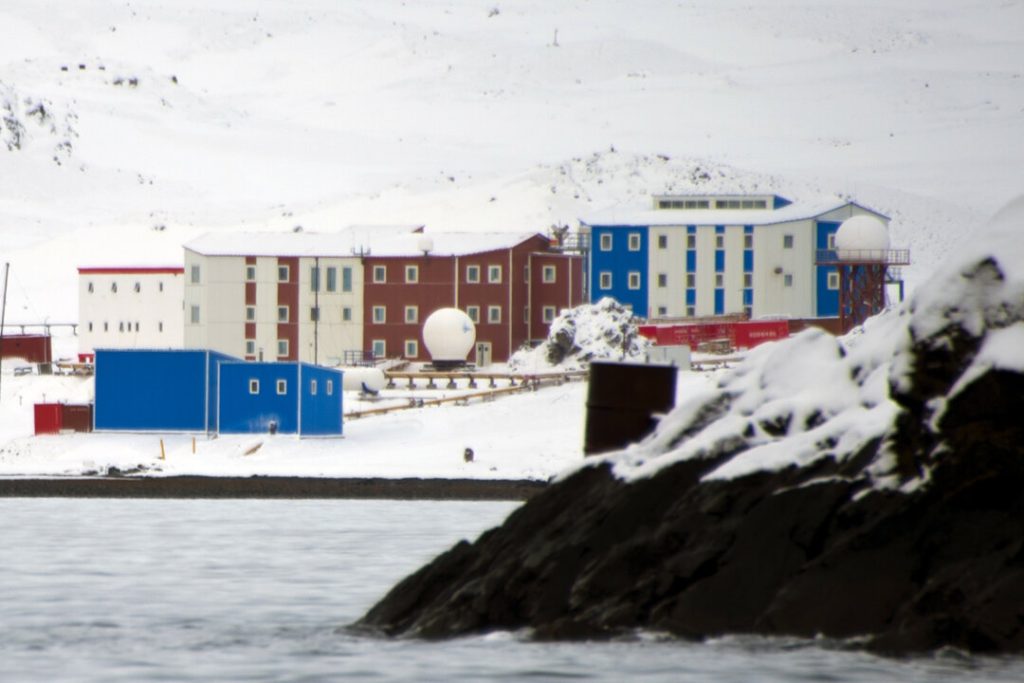







Australia’s Foreign Affairs Department has rejected suggestions that Chinese runways in the Australian Antarctic Territory are an intrusion, saying the treaty governing the continent allows participating countries to establish research stations there.
During a Senate Estimates hearing on Oct. 28, Liberal Senator Jessica Collins questioned officials regarding an airfield serving the Chinese Communist Party’s Zhongshan station, located about 109 kilometres from Australia’s Davis base.
She noted that the runway received an international aviation designation from the United Nations’ civil aviation agency in 2024 and highlighted reports that China has built two more runways in Australia’s territory.
She asked whether the Department of Foreign Affairs and Trade (DFAT) had raised these “insertions on our territory” with Beijing.
“I would not characterise them as insertions,” replied Adam McCarthy, DFAT’s chief lawyer, whose division includes its Antarctic section.
McCarthy said the Antarctic Treaty, signed by Australia, China, and 27 other countries, reserves the continent exclusively for peaceful uses and freezes all territorial claims, including Australia’s claim to 42 percent of the continent.

It also allows treaty parties to inspect each other’s stations.
“Provided any country, any one of the treaty parties complies with the obligations of the treaty, we recognise … any Antarctic treaty party’s right to establish stations where it so wants to do,” McCarthy said.
When asked about whether China had taken over management of airspace around Zhongshan, McCarthy referred the question to the Australian Antarctic Division.
Chinese Military Visits
Senator Collins further inquired whether DFAT was aware of reports indicating that CCP military personnel had visited the base.
“Senator, we are aware of lots of things,” McCarthy replied.
University Links Questioned
McCarthy said the university’s research arrangements were not a matter for DFAT, describing McGee as one of the world’s leading Antarctic experts.
Julie Heckscher, head of DFAT’s regulatory and legal policy division, said the department spoke regularly with the university to ensure it had “careful due diligence and controls in place to manage its sensitive research engagement, including with Chinese institutions.”
McCarthy also told the committee that DFAT’s Antarctic team now has a director and five officers. When he started in the role in October 2021, there was one mid-level officer and a graduate trainee, and a standalone Antarctic section was not established until early 2023.
“The focus on the geostrategic challenges in Antarctica has grown as a significant part of our work,” he said.
China’s expanding Antarctic presence has prompted concerns about the potential military applications of its scientific facilities.