




Soaring energy costs are squeezing the bloc’s industry and pushing it further behind global rivals, Pierre Wunsch has warned
The EU is “not competitive” against global rivals as high energy costs weigh on the bloc’s industry, Belgian’s central bank governor, Pierre Wunsch, has warned.
In an interview with the Financial Times published on Monday, Wunsch said the EU’s energy‑intensive sectors are under mounting pressure, as the bloc struggles to keep production going amid persistently higher power costs following the Covid pandemic, the Ukraine conflict, and the US-Israeli war on Iran.
According to Wunsch, the EU is failing to adjust to a new geopolitical reality, citing US protectionist policies and Chinese subsidies, warning the bloc is losing its ability to shape global standards.
The EU is “just not competitive, that’s it,” he added.
The fallout from the repeated crises has already forced the bloc to scale down its green energy policies over concerns about weak growth, Wunsch said.
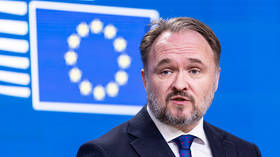
EU Energy Commissioner Dan Jorgensen has warned that the bloc is facing prolonged uncertainty as its energy crisis deepens, with member states now paying significantly more for fossil fuel imports.
The EU has been grappling with the fallout from its decision to cut energy ties with Russia following the escalation of the Ukraine conflict, alongside the costs of its green transition policies.
The US-Israeli war on Iran has added pressure to global energy markets, driving oil prices higher and increasing fuel costs for consumers worldwide. The EU, which imports around 75% of its jet fuel from the Middle East, has been hard hit by the disruption of the Strait of Hormuz, a key route that handles around a fifth of global oil and liquefied natural gas.
The latest developments have prompted some EU politicians to step up calls to reconsider sanctions on Russia.
In January, the European Commission restated its goal of phasing out Russian fossil fuels by 2027. However, EU countries have reportedly increased imports of Russian LNG in the first quarter of this year.
Kremlin envoy Kirill Dmitriev has warned the EU risks deindustrialization under “Russophobic politicians” and that Western governments will eventually be forced to seek renewed access to Russian energy.

