





For regular cannabis users, the feeling of unwinding may have less to do with the mind-altering compound THC itself than with the expectation of relief, according to a double-blind, placebo-controlled trial of 120 healthy adults.
In a study of 120 regular cannabis users, people felt just as relaxed after vaping a placebo—a result that caught even the researchers off guard.
“We actually expected that THC would produce bigger drops in subjective stress than placebo,” Carrie Cuttler, a psychology professor at Washington State University and the study’s lead author, told The Epoch Times.
Is the High Just Placebo?
The researchers randomly assigned regular cannabis users to vape placebo, or cannabis delivering a moderate 20-milligram dose, or a high 40-milligram dose of delta-9 THC.
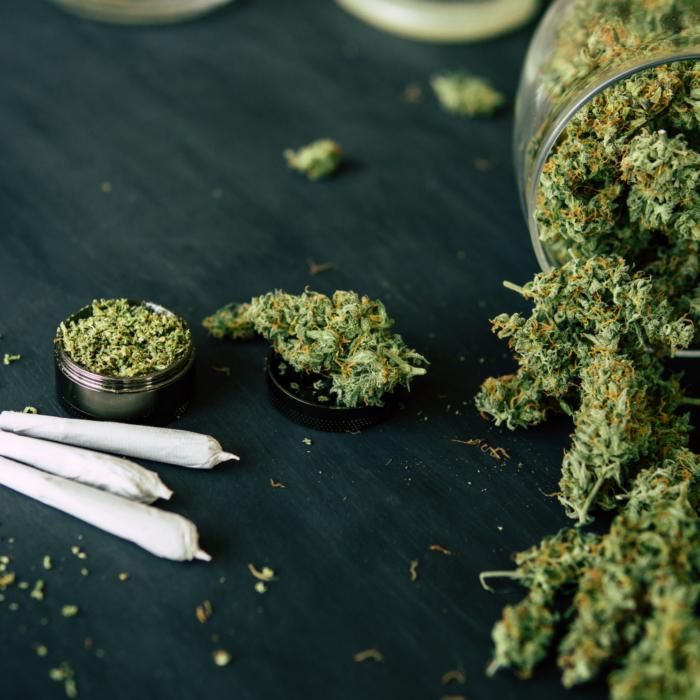
The placebo had trace levels of THC too low to cause an effect.
Before vaping, participants rated their stress on a zero-to-10 scale. They rated it again about five minutes later and an hour after that. Researchers also collected saliva samples to measure cortisol, the primary stress hormone, and tracked their heart rate and skin conductance, small changes in sweat that reflect activity in the nervous system’s “fight or flight” branch.
Self-reported stress fell in all three groups after vaping and remained lower about an hour later. THC groups didn’t feel any calmer than the placebo group.
The findings, “really appears to be an expectancy effect,” Cuttler said.
“People who regularly use cannabis expect to experience reduced stress when they’re using cannabis”—and then genuinely feel less stressed, even when they’ve received a placebo, Cuttler said.
The Power of Expectation
“It really is the expectation that they’re going to experience less stress after vaping cannabis,” Cuttler said.
Vaping itself may reinforce that: stepping away from work, settling into a familiar setting, and—in this study—taking slow, deliberate inhales and holding your breath for a few seconds before exhaling, a ritual that can be relaxing on its own, regardless of what’s in the vape.
That is what makes cannabis difficult to study. Researchers have to separate the drug’s direct effects from everything a person has learned to associate with using it.
Researchers could not determine how much of the change in stress ratings came from expectation, the vaping ritual, the passage of time, or other aspects of the setting. But it suggests that the high and relaxation from using cannabis involve more than the drug alone.
The Body Didn’t Get the Message
Although people said they relaxed, their bodies didn’t uniformly follow.
In the high-dose group, heart rate was significantly higher than in the placebo group.
“That’s fully expected,” Cuttler said. “One of the most common responses to THC is an elevation in heart rate.” Experienced cannabis users generally recognize it as such rather than as a sign of stress or anxiety.
Cortisol levels briefly fell in all groups. But the decrease was greater in the high-dose THC group, suggesting a THC-related effect beyond placebo. Levels returned to baseline within an hour. Cortisol levels didn’t significantly differ across groups by the final measurement.
THC also changed the subtle sweat-gland signals, an indicator of nervous-system arousal. Individual signals were smaller than in the placebo group, and the high-dose group showed more of these signals per minute, a pattern the researchers had not expected.
The results are a reminder that stress has no single biological signature. A person may feel calm even though their heart rate and sweat-gland activity tell a different story.
”This really just suggests that cannabis is affecting all these different stress-related systems differently. It’s not just turning down the body’s stress response,” Cuttler said. “It’s much more complicated.”
The placebo finding is part of that story, too. “Placebo effects are really, really powerful,” Cuttler said.