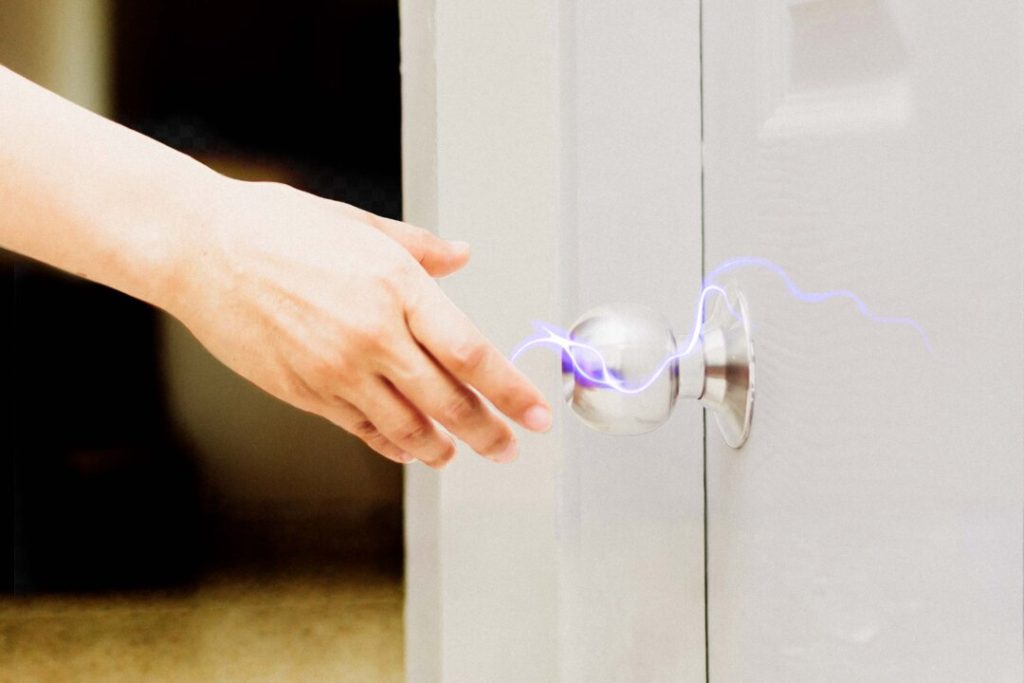








Have you ever reached for a doorknob and suddenly felt a sharp zap? While nearly everyone experiences static electricity occasionally, some people seem to get shocked far more often than others.
Dry air, clothing, footwear, and skin moisture all influence how easily electrical charge accumulates. But from the perspective of traditional Chinese medicine (TCM), susceptibility may also reflect differences in a person’s constitution—particularly how the body circulates qi and blood and maintains adequate fluids.
Chen Hsin-hung, a TCM practitioner at Hanyitang Chinese Medicine Clinics in Taiwan and a contributor to The Epoch Times, said people who frequently experience static shocks tend to fall into three TCM patterns.
Recognizing the accompanying signs, he said, can help determine which approach may be most appropriate.
Why Static Shocks Happen
Static electricity builds up when friction—such as clothing rubbing against the body or shoes moving across flooring—creates an imbalance of electrical charge.

Dr. Chen Wei-ti, a member of the American Academy of Dermatology and a physician at Belléesse Clinic in Taiwan, told The Epoch Times that moisture normally helps electrical charge dissipate. When the air and skin become very dry, particularly during winter, charge can accumulate more easily. Touching a conductive object such as a metal doorknob then causes the accumulated charge to discharge suddenly, producing the familiar zap.
Clothing and footwear also matter. Certain fabrics can generate more static through friction, while rubber-soled shoes can insulate the body and allow charge to accumulate.
TCM does not dispute these environmental factors. Instead, it looks at why dryness and related discomfort may be more pronounced in some people than others.
3 TCM Patterns Linked to Frequent Static Shocks
TCM views the body as an interconnected system in which qi, blood, yin, and body fluids work together to nourish tissues and maintain normal function.
According to Chen Hsin-hung, frequent static shocks may be more noticeable in people with poor circulation or insufficient nourishment and fluids. These imbalances can be divided into three broad patterns.
Pattern 1: Blood Stasis Due to Qi Stagnation
In TCM, qi refers to the body’s vital energy and the functional activity that helps maintain normal physiological processes. When qi does not flow smoothly, blood circulation may also become sluggish—a pattern known as qi stagnation and blood stasis.
People fitting this pattern may have a dull or sallow complexion, chest tightness, low mood, or a sense of emotional constraint. Women may also experience painful menstruation or menstrual blood clots.
For daily care, gentle movement, such as walking barefoot on grass, may help promote circulation.
Adequate hydration is also essential. Daily fluid intake can be estimated based on body weight, at approximately 0.45 fluid ounces per pound. For example, an adult weighing 110 pounds would require roughly 50 fluid ounces of water per day.
Dietary recommendations include moderate intake of foods that help promote circulation or provide gentle nourishment, such as rose, safflower, and wood ear mushrooms.
Rose and Safflower Tea
Rose and safflower tea is traditionally used to promote circulation—what TCM describes as moving qi and invigorating blood—helping ease patterns of stagnation linked to poor blood flow.
Ingredients
Instructions
Place the rose petals and saffron in the hot water, and let them steep for about five minutes before drinking.
Note: Rose and safflower tea is not recommended for women during menstruation or pregnancy.
Acupressure
Regular massage of the following acupoints can help promote the flow of qi and blood:
Joining Valley (He Gu, LI4): Located on the back of the hand, in the depression between the first and second metacarpal bones, toward the index finger.
Bigger Penetrating (Tai Chong, LR3): Located on the top of the foot, in the depression slightly above the space between the first and second metatarsal bones.


Pattern 2: Blood and Yin Deficiencies
A second group may experience dryness together with signs of insufficient nourishment.
In TCM, blood does more than circulate through vessels; it is also considered a substance that nourishes tissues. Yin represents the body’s cooling, moisturizing, and nourishing functions.
When blood and yin are deficient, people may experience pale lips or nails, dizziness, dry skin, fatigue, and cold hands and feet.
In addition to maintaining adequate hydration, soaking the feet or taking warm baths during the winter months can help promote blood circulation and improve cold hands and feet.
Longan and Red Date Tea
Longan and red date tea is commonly used to replenish energy and fluids. In TCM, it helps tonify blood and support yin, particularly for those who feel fatigued or tend to feel cold.
Ingredients
-
5 dried longan
-
5 red dates (pitted)
-
0.1 ounces goji berries
-
17 fluid ounces water
Instructions
Rinse ingredients, place in a pot, and add the water. Bring to a boil, then remove from heat and let steep for approximately 15 minutes before drinking.
Acupressure
Regular massage of the following acupoints can help support circulation and nourishment:
Three Yin Meeting (San Yin Jiao, SP6): Located on the inner side of the lower leg, approximately four finger-widths above the inner ankle, just behind the inner border of the tibia.


Yin Mound Spring (Yin Ling Quan, SP9): Located on the inner side of the lower leg, in the depression just below the knee, along the inner border of the tibia.
Pattern 3: Fluid Deficiency
For some people, dryness itself is the dominant feature.
TCM uses the term “body fluids” to describe fluids that moisten and nourish the skin, mouth, throat, joints, and other tissues.
When these fluids become insufficient, a person may experience dry skin, dry mouth and throat, thirst, or other signs of dryness. Some may also experience night sweats or sensations of heat in the palms and soles.
Lily Bulb and Ophiopogon Tea
Lily bulb and Ophiopogon tea is traditionally used to relieve dryness and support hydration. In TCM terms, it nourishes yin and helps generate fluids, making it suitable for symptoms like dry mouth, throat, or skin.
Ingredients
Instructions
Place ingredients in a pot with hot water and steep for approximately five minutes before drinking.


Acupressure
Regular massage of the following acupoints can help support fluid balance.
Greater Stream (Tai Xi, KI3): Located on the inner side of the foot, in the depression between the inner ankle and the Achilles tendon.


Bubbling Spring (Yong Quan, KI1): Located on the sole of the foot, in the depression that forms when the foot is flexed, approximately one-third of the distance from the toes to the heel, along a line extending from the space between the second and third toes.
Simple Ways to Reduce Static Buildup
Regardless of TCM constitution, reducing the conditions that allow static electricity to accumulate is important.
Using a humidifier during dry weather, moisturizing the skin regularly, and choosing less static-prone clothing can help. Staying adequately hydrated is also important for overall health and normal skin function.
These measures can be combined with TCM approaches according to an individual’s pattern.
When It May Be More Than Static Electricity
Frequent static shocks are usually related to environmental conditions, clothing, footwear, and dry skin rather than disease. However, persistent skin dryness can sometimes accompany conditions such as hypothyroidism or diabetes.
More importantly, sensations that feel like electric shocks may not actually be static electricity. If tingling, burning, pins-and-needles, or shock-like sensations occur without contact with another object, they may represent neurological causes, including peripheral neuropathy, nerve compression, or certain nutrient deficiencies, and persistent or unexplained symptoms should be evaluated by a health professional.