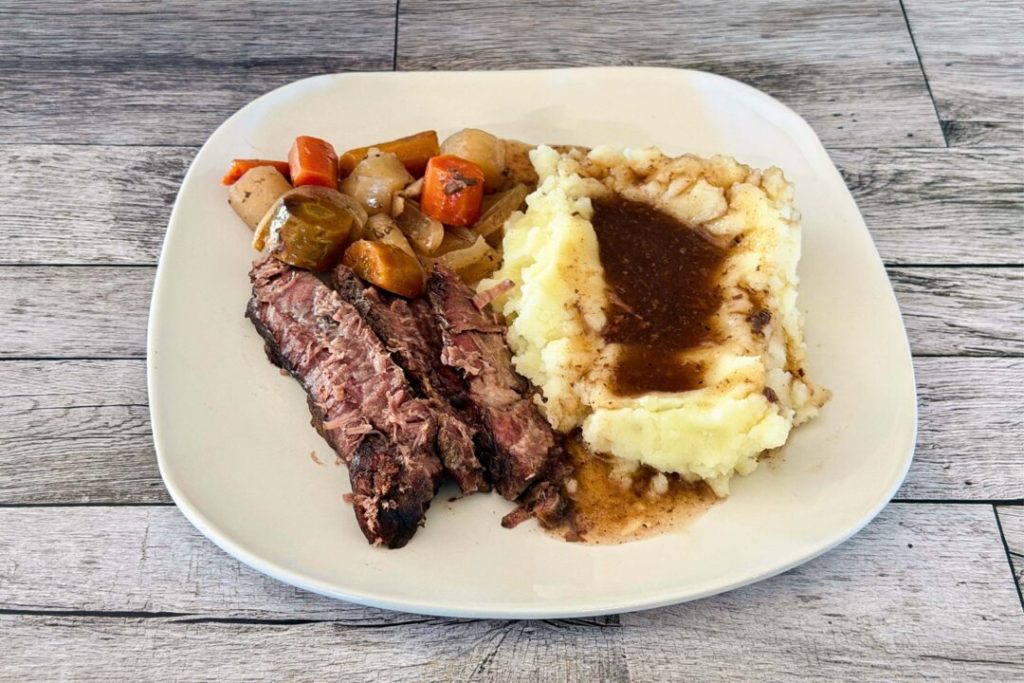

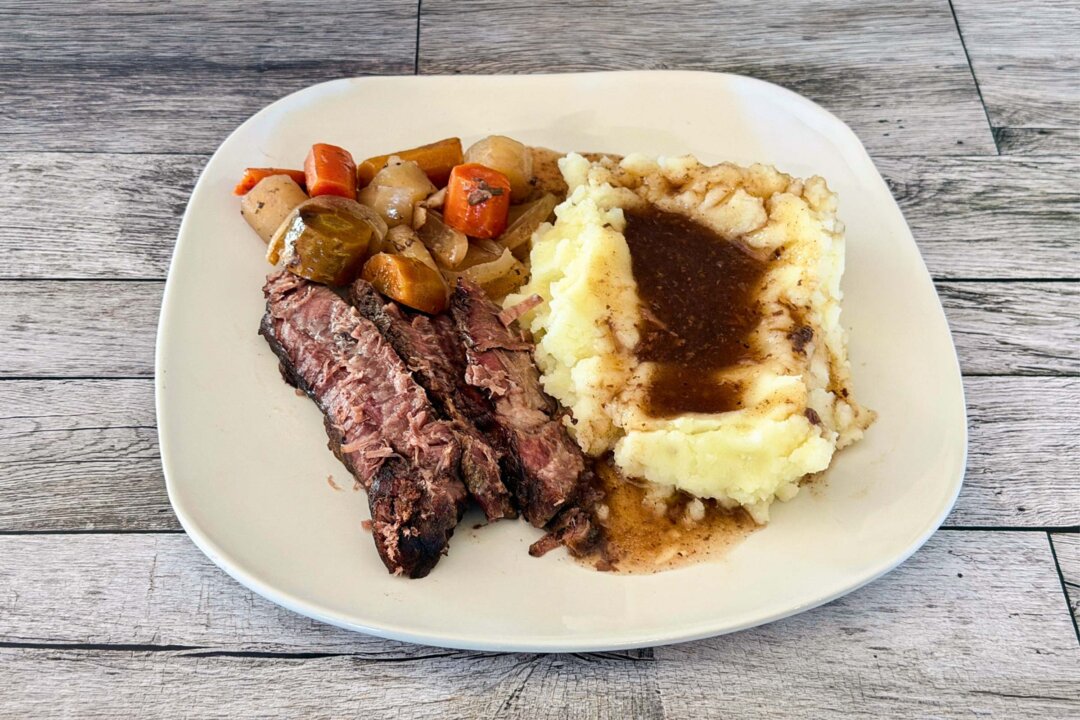







Mashed potatoes and gravy go hand-in-hand with dishes like Thanksgiving turkey, chicken-fried steak, and meatloaf. However, sometimes you want mashed potatoes and gravy when you don’t have pan drippings.
After dental work a few years ago, I was hungry and tired of liquids, but I needed a soft, comforting meal. For some reason, in the middle of summer, I started craving mashed potatoes and gravy, so my husband made them for me. With no meat cooking and no pan drippings to work with, he made delicious, umami-rich gravy using a few simple ingredients.
I’ve mastered making flavorful pan drippings for gravy. I’ll show you how to make rich poultry or beef gravy, with or without pan drippings, and share a simple make-ahead mashed potato technique that may benefit blood sugar and gut health.
The Best Drippings for Gravy
One Thanksgiving, my husband and I each prepared a turkey and made separate batches of gravy. Mine won our family taste test. Here’s what I did:
I arranged a sliced onion, two celery ribs, two carrots, and a few sprigs of fresh sage, thyme, and rosemary around the turkey in the roasting pan. Then I poured 1 cup of broth over the top, followed by 1/2 cup of chardonnay. After roasting, I strained the drippings and used the liquid for the gravy.
For Beef Roast Gravy: Follow the same method using thyme or your favorite herbs, beef broth, and dry red wine.
For an Alcohol-Free Version: Simply omit the wine. The meat, vegetables, herbs, and broth will still produce flavorful drippings for gravy.
Why Cook and Chill Potatoes Before Mashing?

Terri Ward/The Epoch Times
This recipe includes a chilling step for both health benefits and make-ahead convenience, so you only have to reheat and mash the potatoes at dinner time. Because reheating can reduce some of the resistant starch created during chilling, rewarm them gently rather than getting them piping hot.
Mashed Potatoes and Gravy
Make creamy mashed potatoes and savory gluten-free gravy with pan drippings when you have them—or without when you don’t.
Prep Time: 20 minutes
Cook Time: 35 minutes
Total Time: 4 hours
Servings: 6
Ingredients
-
2 1/2 pounds Russet or Yukon Gold potatoes, peeled and cut into 2-inch chunks
-
2 teaspoons sea salt, divided
-
2 tablespoons ghee, butter, or olive oil
-
3 tablespoons organic cornstarch
-
3 tablespoons filtered water
-
1 tablespoon collagen peptides (optional)
-
Strained pan drippings (however much you have)
-
Chicken or beef bone broth, as needed to make 2 cups with the drippings
-
2 tablespoons extra-virgin olive oil
-
1 teaspoon mushroom powder (ground from dried mushrooms; optional, for savory depth)
-
1/2 teaspoon sea salt
-
1/4 teaspoon garlic powder
-
2 cups chicken or beef bone broth
Instructions
Step 1: Place the potatoes in a large pot and cover with cold water by about 1 inch. Add 1 teaspoon salt. Cover and bring to a gentle boil over medium-high heat. Uncover and reduce the heat as needed to maintain a gentle simmer. Cook about 20 minutes until fork-tender.
Step 2: Drain the potatoes well, reserving the potato water. Refrigerate the potato water. Spread the potatoes on a baking sheet; refrigerate once they stop steaming. Chill at least four hours or overnight.
Step 3: When ready to mash, reheat the reserved potato water in a small saucepan and keep warm. Place the potatoes, ghee, butter or olive oil, remaining 1 teaspoon salt, and 1/4 cup warm potato water in a larger saucepan over low heat. Cover and heat, stirring occasionally, until warm throughout.
Step 4: Mash with a masher or ricer, adding potato water until your preferred texture is reached. Reserve any remaining potato water for the gravy.
Step 5: Cover and keep warm until ready to serve.
Step 6: Whisk the cornstarch and water in a small bowl until smooth. Set aside.
Step 7: Measure the strained pan drippings and add enough broth to equal 2 cups. Warm the drippings and broth in a skillet over medium heat. When the gravy reaches a simmer, whisk the slurry again and slowly pour it into the skillet, whisking constantly.
Step 8: Crumble a few dried mushrooms into a spice grinder or bullet blender and grind until finely powdered. Measure 1 teaspoon; reserve the rest for soups, sauces, or to replace breadcrumbs in meatballs or meatloaf.
Step 9: Heat the olive oil in a skillet over medium-low heat. Stir in the mushroom powder, salt, and garlic powder for 20 to 30 seconds, until fragrant. Add the broth and cook until simmering. Whisk the slurry again and slowly pour it into the skillet, whisking constantly.
Step 10: Simmer either gravy for one to two minutes, whisking, until it thickens and lightly coats the back of a spoon. If too thick, whisk in reserved potato water one tablespoon at a time. Sprinkle the collagen peptides over the top, if using, and stir until fully dissolved.
Step 11: Serve gravy over the potatoes and enjoy.
Storage: Refrigerate leftover mashed potatoes and gravy in separate airtight containers within two hours. Use within three to four days, or freeze for three to four months. Thaw overnight in the refrigerator. Cornstarch-thickened gravy can turn spongy or watery after thawing, so whisk it vigorously. Reheat the potatoes and gravy separately until steaming hot throughout, adding a little water or broth to either one if it has thickened.
Frequently Asked Questions
Q: Which potatoes are best for mashed potatoes?
A: Russet potatoes have more starch and create a light, fluffy mash. Yukon Golds make a denser, creamier mash with a naturally buttery flavor. Choose your favorite, or a mix of the two.
Q: Can I use a lower-carb vegetable instead of potatoes?
A: Yes. Replace some or all of the potatoes with cooked, mashed cauliflower or celeriac for a lower-carb option. Mashed parsnips are another possibility; they’re only slightly lower in carbs, but have more fiber.
Q: Do I need to use bone broth?
Q: Why add collagen to gravy?
Q: What can I make with leftover mashed potatoes and gravy?
A: Turn leftover mashed potatoes into potato cakes or use them to top shepherd’s pie. Leftover gravy adds flavor and body to soups, pot pie, or hash.