




Europe Prepares to go it alone as Trump Returns to War in Iran
By JACK DETSCH and PAUL MCLEARY
The president’s comments that the U.S. ceasefire with Iran had ended only cemented the sense among NATO members that they can no longer rely on America.
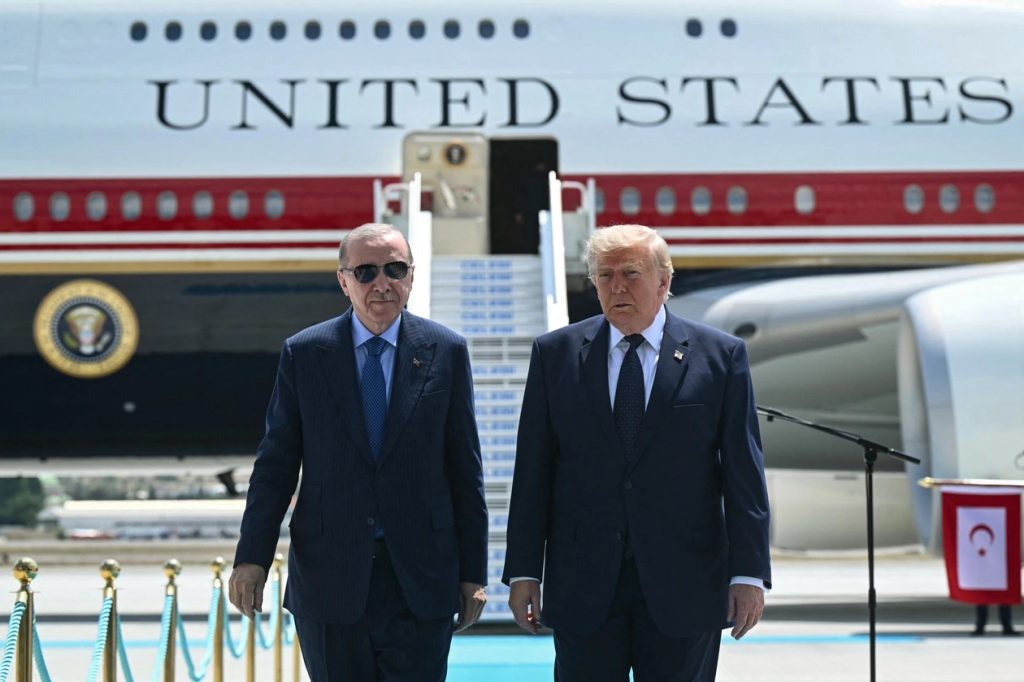
ANKARA, Turkey — President Donald Trump’s declaration at the NATO summit that the U.S. had returned to war with Iran didn’t lead to the usual gasping allies or perplexed officials.
If anything, it cemented Europe’s increasing reliance on itself.
As motorcades sped out of Ankara’s presidential place and down the barricaded streets ringing the Turkish capital on Wednesday, a half-dozen European officials said the ceasefire’s end only stiffened their resolve to be less dependent on the American militarily and stand alone.
“After seeing what’s happening in Iran and Ukraine, we first of all, have to build our own military might, and then everybody will respect us: Americans, Russians, Iranians or Chinese,” said a European official. “The more muscles you have, the less political anger you show.”
Trump, going off topic at a press conference, said the peace deal with Tehran wasn’t working and he would take control of Iran’s Kharg Island — a major oil-producing hub — as soon as Wednesday night. U.S. Central Command, who oversees the region for the military, later said it had started conducting strikes against Iran to hold its leaders accountable for “recent unjustified aggression” against commercial shipping.
European officials struggled to determine how their countries could weather the conflict’s continued economic shocks and whether to take the U.S. president at his word. But many felt Trump’s resumption of the war, in which European countries refused to participate, only underscored the growing transatlantic divide — even with NATO’s reliance on America’s nuclear weapons.
“It‘s a concrete sign of the distance,” said a second European official, who like others, was granted anonymity to discuss the continent’s emerging foreign policy strategy. “We depend on the nuclear umbrella. No fast way out. But yes, it‘s pushing us.”
The sentiment followed officials’ more assertive language at the gathering. A unanimous summit declaration included tougher language on Russia and stronger support for Ukraine. Allies signed deals worth billions of dollars, some of the biggest among themselves. Canada announced plans to buy submarines from Germany, a major reversal from decades of U.S. purchases.
Trump’s Iran comments underscored just how much European leaders feel fed up.
“If the allies were not informed up front or asked to come up with potential contributions … how can anyone expect that allies were not delivering?” said Czech President Petr Pavel. “That’s why European allies were hesitating. What kind of support [are we] expected to provide?”
Trump’s remarks mark the most concrete sign of a full resumption of military operations since Washington and Tehran agreed to a ceasefire three months ago. The Pentagon struck Iranian military sites on Tuesday in response to Tehran’s attacks on ships attempting to move through the Strait of Hormuz, a critical waterway for about 20 percent of the world’s oil.
The president said he had already authorized strikes on Kharg Island except for oil infrastructure. And he threatened to resume a blockade on Iranian ships in the strait.
Trump’s comments created a sense of whiplash among allies. Just a day prior, Trump indicated Iran’s leaders were more reasonable. But on Wednesday, he referred to them as “cuckoo.”
The situation has not only rocked global markets; it has also led some allies to reconsider how they trade.
“The closure of the Strait of Hormuz showed us that we are too dependent on some supply chains,” said Maria Malmer Stenergard, Sweden’s foreign minister. “So everyone has woken up a bit and realized we have to diversify. It’s good for our resilience in Europe.”
Trump on Wednesday hinted the U.S. could wrap up the war without a peace deal because “it’s easier.” And he used the final press conference of the event to take another shot at the 2015 Iran nuclear deal that he ripped up in his first term.
“They thought they could buy peace with these people,” he said. “You can’t do that.”
But in a surprising shift, the president mostly held his fire against Europe — except for Spain, which he accused of failing on defense spending and threatened to cut off trade.
Europe’s refusal to participate in the Iran war was just a “bad moment,” he said. He even struck a more measured tone behind the scenes with higher-spending allies.
By the time workers began tearing down posters and packing up high-stacked trays of kebab and rice pilaf, Trump was even openly praising Europe.
“They love us, they love each other,” Trump said. “They like the job I’m doing, they said, ‘We love sir, we love you.’ These are grown people saying that. Isn’t that nice?”
Not all Europeans shared the sentiment.
“It’s telling,” said a German official. “Europeans don‘t take Trump seriously any longer.”